TL;DR: A Rice University survey reported October 5, 2026 found income decided disaster readiness in greater Houston, with 49% of households earning under $25,000 saying they were unprepared.
Houston feels ready — until income is counted
Most Houston-area residents told researchers they felt prepared for a natural disaster, yet that confidence broke apart when answers were sorted by earnings, according to Houston Public Media.
The split was sharpest at the bottom of the pay scale. Among participants living in households earning less than $25,000 per year, 49% said they would be “not at all” or “not too prepared” if a disaster struck, according to Houston Public Media. That figure means nearly one in two of the lowest-income households expected to face a flood, hurricane, freeze, or extended outage without adequate preparation.
By contrast, households earning $150,000 or more described far higher levels of home protection and financial cushioning. The survey was conducted through Rice University’s Greater Houston Community Panels, a research effort housed with the Kinder Institute for Urban Research, and it was reported by Houston Public Media on October 5, 2026.
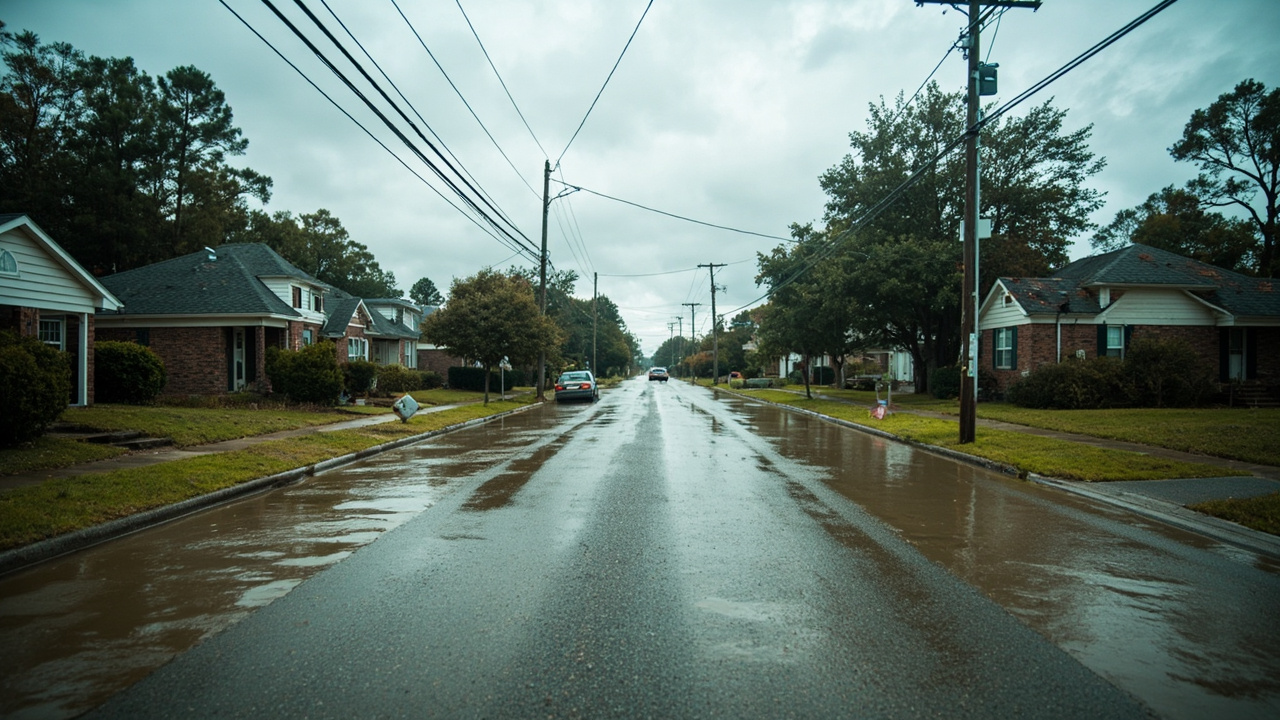
The timing matters for preparedness readers. The report arrived after Hurricane Beryl flooded streets in Southwest Houston on July 8, 2024, an event documented in a Sarah Grunau photograph for Houston Public Media, and after millions lost power across the region during that storm. The new findings show that recovery lessons did not reach every household equally.
What lower-income households go without
The research did not only measure feelings. It asked whether people had completed practical steps to make a home safer, and lower earners consistently reported fewer completions.
Respondents earning under $25,000 were less likely than respondents earning $150,000 or more to document belongings, carry property insurance, and set aside savings for an emergency, according to Houston Public Media. Those three tasks — recording what you own, insuring the structure and contents, and holding a reserve fund — form the financial backbone of recovery after wind, water, or fire damage.
Generator ownership followed the same pattern. Households earning less than $25,000 were the least likely income group to own a generator, according to Houston Public Media. That gap is consequential in a metro where extended blackouts followed Beryl in 2024 and where medical devices, refrigeration, fans, and phone charging depend on backup power.
Daniel Potter, co-director of the Houston Population Research Center at the Kinder Institute, linked the difference directly to cost, according to Houston Public Media. Steps that carry a price tag, he explained, are harder to complete on limited earnings, while higher earners can absorb the expense more readily. The result is a different total number of protective steps taken, shaped by available resources.
A summary of the same survey carried by Wisevoter described the pattern in similar terms, noting that economic barriers kept many Houstonians from completing protective home measures and that higher-income households found paid measures easier to afford.
Five out of ten: where Houston stands on federal checklist
The survey measured progress against 10 precautionary actions drawn from FEMA’s National Household Survey, according to Houston Public Media.
Houston-area residents reported completing five actions on average. Commonly completed items included enrolling for weather alerts and maintaining insurance on property, according to Houston Public Media. Those are important first layers because alerts provide warning time and insurance provides a path to repair or replacement.
Less-common items revealed a planning shortfall. Making a written emergency plan and practicing it through drills received considerably less attention than alerts and insurance, according to Houston Public Media. Wisevoter, summarizing the same results, reported that residents averaged only five of the 10 FEMA-recommended emergency actions.
For preparedness-minded households, that average points to unfinished work that does not always require a large purchase. A written plan names meeting places, out-of-area contacts, evacuation routes, and responsibilities for children, older adults, and pets. A drill walks through that plan before stress is high. Reviewing the full list of 10 federal actions and checking which five remain undone can help a household prioritize the next move. State-level readiness resources and guides are listed at Txready.org, according to Houston Public Media.
Beryl drove generator sales — but most still lack one
Backup power emerged as a central theme because the memory of Beryl-era outages remains fresh. The survey found that generator ownership carried particular weight after millions were left without electricity when Beryl struck Houston in 2024, according to Houston Public Media.
Buying behavior was reactive. Among survey participants who owned a generator, 49% said they bought it during or after Beryl, according to Houston Public Media. Wisevoter likewise noted that nearly half of generator owners dated their purchase to that storm period.
Even after that buying wave, a majority remained without backup generation. Well over half of Houstonians did not own a generator at the time of the survey, according to Houston Public Media. Households earning less than $25,000 were again the least likely to own one, reinforcing the link between income and access to higher-cost gear.
The lesson for gear planning is straightforward: waiting until landfall warnings or store shelves empty raises prices and limits choice. Households that cannot yet fund a fuel-burning generator can still build layered power resilience over time. Keep phones charged ahead of forecast threats. Keep flashlights, headlamps, and spare batteries accessible. Keep a battery bank topped off for communications. Keep refrigerator discipline in mind during an outage to protect food longer. Those are general practices that support safety while a household works toward larger backup options.
Where you live tracks with backup power
Generator ownership was not evenly spread across the metro, revealing county and neighborhood divides that mirror income and housing patterns.
Montgomery County led the three counties covered in detail. More than half of respondents there said they owned a generator, compared with 38% in Harris County and 35% in Fort Bend County, according to Houston Public Media. Wisevoter reported the Montgomery figure at 50% and repeated the Harris and Fort Bend percentages, underscoring the county gap.
Neighborhood contrasts were even starker. In Magnolia, 70% of residents reported owning a generator, while only 18% of residents in the Medical Center, Museum District, and Third Ward area reported the same, according to Houston Public Media. That 52-point spread shows how local housing type, storage space, rental status, and neighborhood resources shape what gear is practical to own and where to keep it.
For apartment dwellers and others who cannot safely run combustion equipment, the comparison is a reminder to choose appropriate alternatives. Fuel-burning units require outdoor placement far from windows and never belong indoors, in garages, or on balconies where exhaust can collect. Renters and small-space households can focus instead on portable lighting, power banks, water storage, nonperishable food, and a go-bag that supports leaving quickly if officials advise evacuation. Those general steps do not replace whole-home backup, but they preserve mobility and basic comfort during a short outage.
What researchers recommend for tight budgets
Potter pointed low-income residents toward community support and information networks rather than expensive purchases alone, according to Houston Public Media.
He named West Street Recovery and United Way as organizations that can help lower-income residents prepare for natural disasters, according to Houston Public Media. Both groups work in the Houston region on recovery and community support, and connecting with them before storm season can clarify what aid, training, or supplies may be available locally.
He also stressed staying linked to alerts and trusted networks throughout the year, according to Houston Public Media. “Houston, unfortunately, is a 12-month-a-year disaster zone, and so it’s not just about paying attention during hurricane season, but getting plugged in and being aware of what’s going on throughout the year to make sure folks are ready to be prepared,” Potter said, as quoted by Houston Public Media. He added that awareness will not prevent a disaster but can leave people better positioned to recover.
That year-round framing fits Houston’s hazard calendar, which extends beyond hurricanes to floods, severe thunderstorms, extreme heat, freezes, and industrial incidents. Signing up for local weather reports, city and county emergency alerts, and neighborhood communication channels provides earlier notice at no purchase cost. Keeping copies of key documents in a waterproof pouch, photographing rooms for insurance records with a phone, and building a small emergency fund in stages are low-cost moves that align with the protective actions higher earners completed more often.
Survey scope is growing across greater Houston
The October 2026 release also marked an expansion of the research itself. Fort Bend and Montgomery counties were included for the first time, broadening the picture beyond Harris County, according to Houston Public Media.
Coverage is planned to widen again. The Greater Houston Community Panels’ scope will begin including Galveston County in late 2026 to early 2027, according to Houston Public Media. Wisevoter likewise reported that the panel will add Galveston County in that late-2026 to early-2027 window and placed the study results on an October 5, 2026 timeline after Beryl in 2024.
For readers building a household plan now, the takeaway is to treat preparedness as steady maintenance rather than a seasonal rush. Review insurance paperwork, update document photos, test flashlights and radios, refresh stored water and food, confirm contact numbers, and revisit the household meeting plan. Check Txready.org for Texas-focused readiness guides, as listed by Houston Public Media. Low-cost consistency, paired with community connections such as West Street Recovery and United Way, offers the most accessible path for households working within tight budgets.
Sources referenced
- Rice University study finds income disparities in natural disaster preparedness – Houston Public Media (https://www.houstonpublicmedia.org/articles/news/harris-county/2026/10/05/563640/rice-university-study-finds-class-disparities-in-natural-disaster-preparedness/)
- Survey Revealed Gaps in Houston Disaster Preparedness | Wisevoter (https://wisevoter.com/world/us/tx/houston/2026/10/05/survey-reveals-gaps-houston-disaster-preparedness)