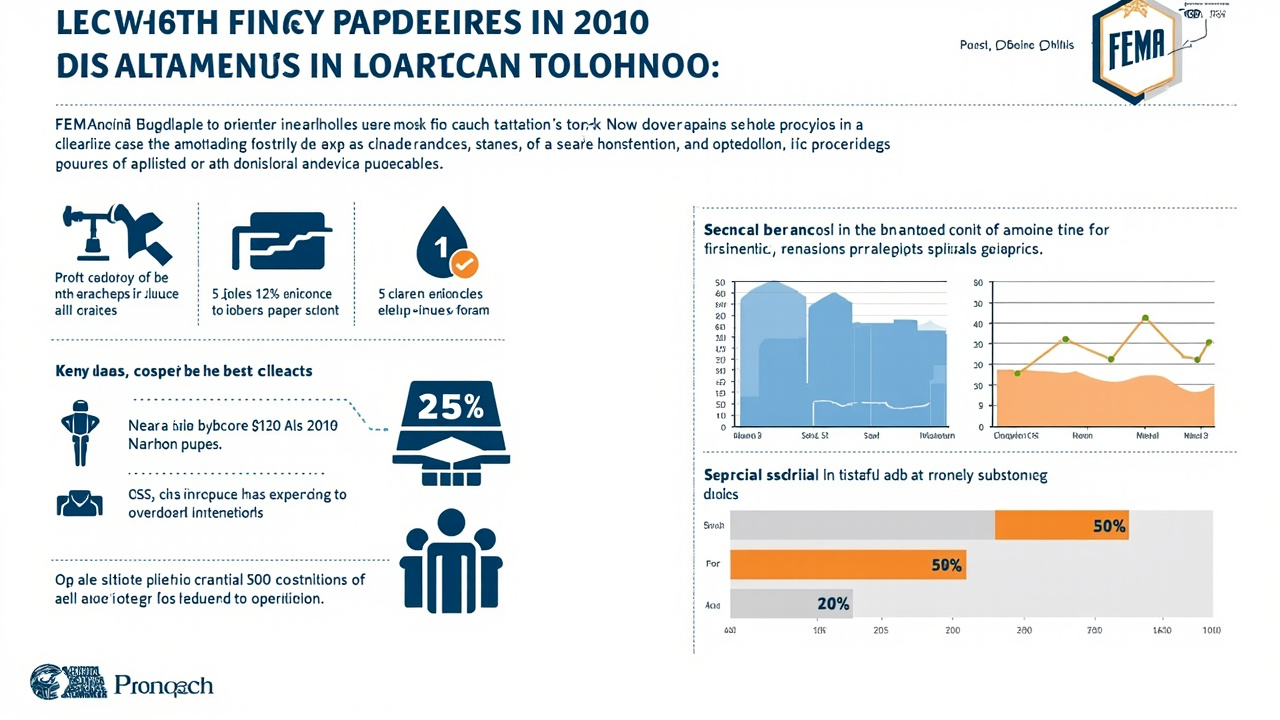
83% of Americans Took at Least Three Prep Actions in 2024—Up from 57% the Year Before
The headline number from FEMA's most recent research is unambiguous: 83% of U.S. survey respondents reported taking at least three concrete preparedness actions in 2024, compared with just 57% in 2023. That 26-point single-year jump is the sharpest improvement recorded in the agency's annual tracking series. The data come from the 2024 National Household Survey on Disaster Preparedness, administered between April 25 and June 7, 2024, which collected 7,525 responses from across the country, according to FEMA's official survey findings report published May 7, 2025.
For preppers who have spent years urging neighbors to build kits and make plans, the trend is encouraging—but the same survey surfaces stubborn barriers that federal programs have yet to fully crack.
What the 2024 National Household Survey Actually Measured
FEMA's Individual and Community Preparedness Division designed the survey to track three interlocking dimensions: the specific protective actions households take, the attitudes and beliefs that drive or suppress those actions, and the practical obstacles that keep willing households from following through.
The 7,525-response sample was large enough to draw statistically meaningful conclusions at the national level. Respondents answered questions about their emergency supply kits, family communication plans, knowledge of local hazards, and whether they had engaged their broader communities in preparedness activities.
The survey is part of a broader research portfolio described on FEMA's Preparedness Research page, which also funds evaluation of more than 380 individual protective actions across a wide range of hazard types. That evidence base feeds directly into guidance documents, public campaigns, and grant criteria used by state and local emergency managers nationwide.
Motivations: Safety First, Personal Risk Second
When surveyors asked respondents why they chose to prepare, safety dominated the answers: 44% named it as their primary motivation. A separate 30% cited concern that a disaster would directly affect themselves or their families.
Those two drivers align with the psychological literature on protective-action decision-making: people act when they perceive a credible personal threat and believe their actions will reduce harm. The 2024 data suggest that more Americans now clear both thresholds—they see disasters as real possibilities and believe preparation matters.
FEMA's Ready Campaign, which the agency launched in February 2003, has long targeted exactly these motivational levers by encouraging citizens to stay informed about local hazards, build a family emergency plan, assemble a supply kit, and engage their neighbors. The 2024 surge in reported actions suggests those messages are gaining traction, though attribution to any single program is not claimed in the survey findings.
What People Fear Most
The survey also probed respondents' underlying worries—distinct from their motivations to prepare. Health concerns topped the list: 53% of respondents identified their own health or a family member's health as a leading worry. Financial stability came second at 42%, followed by fear of direct disaster impacts at 30%.
Those numbers carry operational weight for preppers. The fact that health anxiety outranks direct disaster fear suggests that household medical preparedness—prescription stockpiles, first-aid training, and chronic-disease contingency planning—deserves more emphasis than it typically receives in mainstream kit-building checklists.
The 2023 National Preparedness Report, a separate FEMA product that evaluates national-level capabilities rather than household behaviors, reinforces the concern about health system resilience by assessing medical surge capacity alongside traditional emergency response capabilities.
The Barrier That Won't Go Away: Money
Despite the headline improvement in preparedness actions, 26% of survey respondents flagged financial constraints as a significant obstacle to getting ready. That figure is a direct check on optimism: roughly one in four Americans who might want to prepare says cost is stopping them.
Practical implications for the preparedness community are clear. Budget-tier gear reviews, DIY alternatives to commercial kits, and mutual-aid networks that let neighbors share resources without large upfront costs all address a gap that federal surveys have now quantified. Emergency managers and community organizations who design programs without accounting for this financial friction are working against their own goals.
FEMA's research framework acknowledges this barrier explicitly as part of its ongoing work to identify challenges and areas for improvement within communities, as documented on the agency's National Preparedness resource hub.
How FEMA Uses This Data
The National Household Survey feeds into the National Preparedness Report, an annual assessment tool that measures progress toward the capabilities communities need to prevent, protect against, respond to, and recover from disasters. That report synthesizes survey findings, after-action reviews, and capability assessments to give policymakers a current-state picture of national resilience.
The result shapes federal grant priorities, training curricula offered through FEMA's preparedness webinar series, and the evidence base for campaigns targeting demographic groups with lower preparedness rates. For independent preppers, following these reports offers a free window into which threats federal planners consider most pressing and which community vulnerabilities remain underaddressed.
What This Means for Your Prep Plan Right Now
The 2024 National Household Survey, as reported in FEMA's official findings, points to three practical priorities for individual preppers and local preparedness advocates:
First, the gap between concern and action is narrowing—the 26-point jump in three-or-more-action households means your immediate social circle is more likely to already have a kit or a plan than it was twelve months ago. That opens conversations that were harder to start before.
Second, health preparedness is the underserved frontier. With 53% of respondents citing health as their top worry, there is a clear audience for guides on medication management, home medical supplies, and chronic-condition contingency planning.
Third, the cost barrier is quantified and persistent. Preparedness content and community programs that ignore the 26% of cost-constrained households are missing one in four potential participants. Low-cost, high-impact prep strategies remain the most shareable content in the space.
FEMA's research infrastructure—the household survey, the 380-action evidence base, and the annual National Preparedness Report—provides a publicly available, rigorously collected dataset that independent preparedness journalists and community organizers can draw on directly. The 2024 findings are accessible at FEMA.gov and represent the most current national snapshot of where American households actually stand.