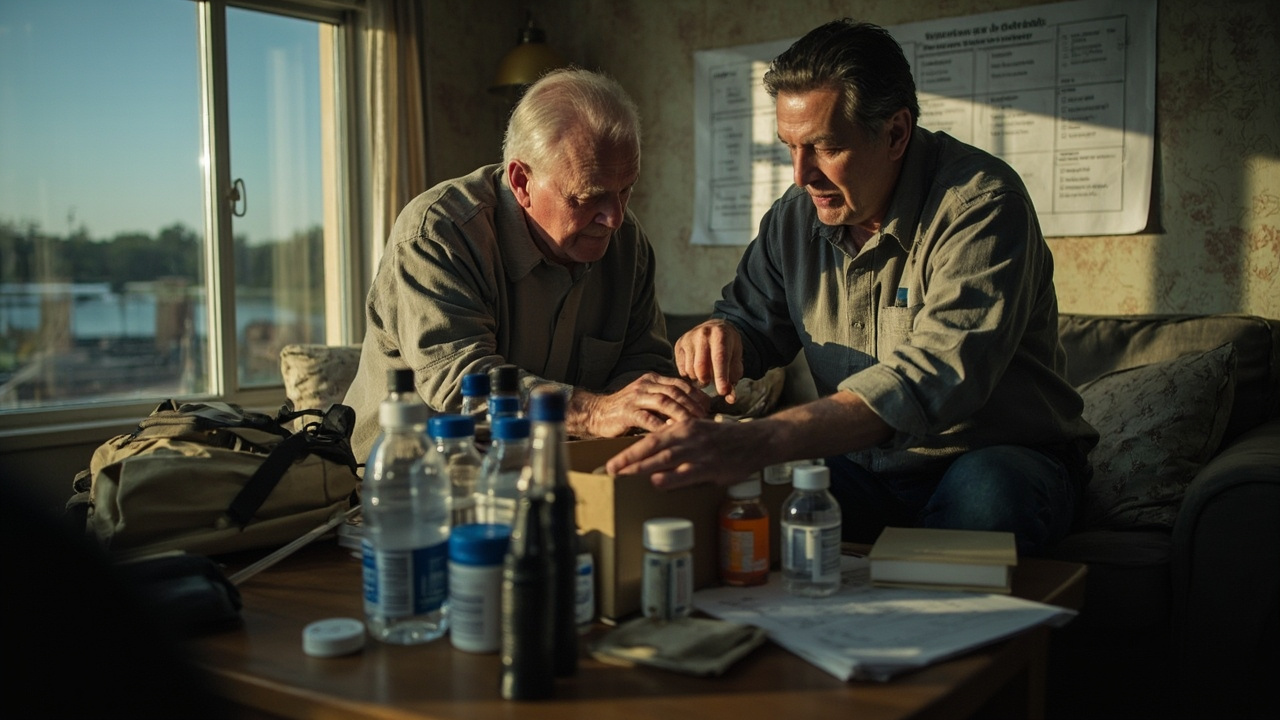
TL;DR: Older adults who lived through multiple, overlapping hazard events within a year were more likely to be well-prepared, and caregiving responsibility intensified that association, according to SUNY Research Connect.
What the compound-disaster study found
According to SUNY Research Connect, exposure to compound disasters was associated with greater preparedness among older adults. The page defines compound disasters as multiple, overlapping hazard events within a year. The analysis used data from the 2022 and 2023 FEMA National Household Surveys, with a sample of 4,075 respondents. Researchers used multivariable logistic regression to assess the impact of compound exposure and its interaction with caregiving status on preparedness. Results showed that compound exposure increased the likelihood of being well-prepared. Caregiving responsibilities intensified this effect. The associations remained robust after controlling for demographic, socioeconomic, and psychosocial factors, including coping appraisal and information-seeking behavior. The findings suggest that caregiving may function as a motivator, enhancing protective action in high-risk contexts. The summary states that tailored preparedness initiatives that engage older caregivers may be critical for advancing disaster resilience in aging communities.
Who conducted the research
According to SUNY Research Connect, the authors are Yanjun Dong, Kun Wang, Victoria M. Rizzo, and Min Zhang. The listed affiliations are SUNY Albany, Albany Guardian Society, University of Alabama at Birmingham, and Johns Hopkins University. The article appears in the Journal of Applied Gerontology, Volume 45, Issue number 10. The listed pages are 1941-1952, and the number of pages is 12. The original language is English. The DOI is https://doi.org/10.1177/07334648251415046. The state is Published - Oct 2026. The publication record frames the work around a gap in understanding, stating that older adults are especially vulnerable during disasters, yet the factors influencing their preparedness remain underexamined. The study investigated whether exposure to compound disasters is associated with greater preparedness among older adults and whether caregiving responsibilities moderate this relationship.
How exposure and caregiving were analyzed together
According to SUNY Research Connect, the study assessed the impact of compound exposure and its interaction with caregiving status on preparedness. The data source was the 2022 and 2023 FEMA National Household Surveys. The analytic sample included 4,075 participants. The method was multivariable logistic regression. The model examined compound exposure as a predictor of being well-prepared. The model also examined caregiving status as a moderator of that relationship. The controls included demographic factors. The controls also included socioeconomic factors. The controls also included psychosocial factors. Two named psychosocial controls were coping appraisal and information-seeking behavior. After those controls, the association between compound exposure and being well-prepared remained. The interaction with caregiving responsibility also remained. The record describes caregiving as intensifying the effect of compound exposure on preparedness.
Why caregiving mattered in high-risk contexts
According to SUNY Research Connect, caregiving responsibilities intensified the effect of compound exposure on the likelihood of being well-prepared. The findings suggest that caregiving may function as a motivator. The described mechanism is enhancing protective action in high-risk contexts. The implication stated in the record is that tailored preparedness initiatives that engage older caregivers may be critical for advancing disaster resilience in aging communities. The focus is on aging communities. The focus is on older adults who have caregiving responsibilities. The focus is on people with exposure to multiple, overlapping hazard events within a year. The study does not present caregiving only as a burden in this result; it presents caregiving as a factor associated with stronger protective action after compound exposure. That association held after accounting for demographic, socioeconomic, and psychosocial factors, including coping appraisal and information-seeking behavior.
What national resilience guidance says about older adults
According to the AARP Disaster Resilience and Preparedness Tool Kit, older adults are disproportionately impacted by disasters, often representing the majority of fatalities. The Tool Kit is described as a free publication for how local leaders can reduce risks and better protect older adults, and how older adults can reduce risks and better protect themselves. The U.S. Census Bureau projects that by 2034 people age 65 or older will outnumber those under 18, a first in the nation's history. The Tool Kit states that trend has profound implications for emergency management, especially as floods, droughts, tornadoes, heat waves, hurricanes, wildfire flames and smoke, and other weather-related hazards and disruptive events become more common and severe. The guide can inform older residents, their families and, when needed, caregivers about preparing for the possibility of having to evacuate or shelter in place due to a weather event or other emergency. By understanding all stages of the disaster life cycle, local leaders can ensure that an all-ages lens is effectively integrated into preparedness, response, recovery and mitigation efforts.
Inside the 36-page Tool Kit
According to the AARP Disaster Resilience and Preparedness Tool Kit, the publication is 36 pages and information- and image-filled. It is intended to help local leaders, including government staff, aging-services professionals and volunteers, foster community-wide resilience that bolsters the safety and well-being of all residents. The Table of Contents lists Preface: The Disaster Life Cycle. It lists Part 1: The Impact of Disasters on Older Adults. It lists Part 2: Strategies for Expanding Resilience. It lists Part 3: Tools and Tips. It lists Part 4: Checklists and Kits. It lists One More Thing: Resilience Supports. The page states that by understanding their community's disaster and emergency response plans and resources, residents can better prepare themselves. The Tool Kit is adapted from the AARP Disaster Resilience Tool Kit, a resource for local leaders published in 2022 by AARP with the Federal Emergency Management Agency as a companion to the Guide to Expanding Mitigation: Making the Connection to Older Adults. That FEMA guide was created by FEMA in cooperation with AARP for emergency management professionals. The page for the current Tool Kit was published in September 2026.
Compound events in recent experience
According to the AARP Disaster Resilience and Preparedness Tool Kit, readiness and relationships were keys to survival in 2017 for residents of the U.S. Virgin Islands and Puerto Rico, when two massive hurricanes — Irma and then Maria — devastated the Caribbean islands. The Tool Kit references first-person accounts of the two AARP state directors who prepared for, lived through, and helped their communities both endure and work to recover from a season of unprecedented weather during the days, weeks and months after the storm. That example addresses back-to-back major hurricanes in one season. The SUNY Research Connect study uses a related time frame for compound exposure, defined as multiple, overlapping hazard events within a year. The study sample covers responses to the 2022 and 2023 FEMA National Household Surveys. The article record lists publication in October 2026 in the Journal of Applied Gerontology. Together, the sources place repeated hazards, caregiving roles, and older-adult risk in the same planning conversation.
What this means for caregiver-centered preparedness planning
According to SUNY Research Connect, tailored preparedness initiatives that engage older caregivers may be critical for advancing disaster resilience in aging communities. According to the AARP Disaster Resilience and Preparedness Tool Kit, the guide can inform older residents, their families and, when needed, caregivers about preparing for evacuation or shelter in place due to a weather event or other emergency. The Tool Kit directs attention to all stages of the disaster life cycle. Those stages include preparedness, response, recovery and mitigation. The Tool Kit calls for an all-ages lens in those efforts. For households that include an older caregiver, the practical use of these sources is to connect caregiving responsibility with planning for repeated hazards within a year. The study points to coping appraisal and information-seeking behavior as factors that were controlled in the analysis. The Tool Kit points to community disaster and emergency response plans and resources as information residents should understand. Local leaders named in the Tool Kit include government staff, aging-services professionals and volunteers. The stated goal is community-wide resilience that supports the safety and well-being of all residents.
Sources referenced
- Compound Disaster Exposure and Preparedness Among Older Adults: The Amplifying Role of Caregiving Responsibility - SUNY Research Connect (https://researchconnect.suny.edu/en/publications/compound-disaster-exposure-and-preparedness-among-older-adults-th/)