TL;DR: Merced County issued a local emergency proclamation in the week ending Oct. 2, 2026, to accelerate winter-storm preparation ahead of a forecast very strong El Niño.
County Acts Before Storms Arrive
Merced County issued a local emergency proclamation this week to prepare county departments, emergency response agencies, infrastructure and communities for significant winter weather impacts, according to ABC30 Fresno.
The county action anticipates heavy rain, flooding and transportation disruptions. The proclamation allows the county to streamline preparations for heavy rainfall, localized flooding, storm-related damage and transportation disruptions.
County leaders said the emergency proclamation will help accelerate preparedness efforts before winter storms arrive. Merced County District 5 Supervisor Scott Silveira said the declaration lets work move faster after weeks of planning to get ahead of preparation, according to ABC30 Fresno.
Emergency Services Manager Adam Amaral said the county learned lessons from prior floods about strengthening relationships with partners. Amaral emphasized that the proclamation is intended to improve preparedness, not cause alarm.
"We don't want to put fear into people. What it does and allows Merced County to do is be more proactive in our response if we need to, coordination and preparedness throughout the county, including our six cities and all our special districts," Amaral said, as reported by ABC30 Fresno.
The Merced County Board of Supervisors is scheduled to consider ratifying the proclamation at its regular meeting Tuesday at 10 a.m. Ratification is the next procedural step for the local proclamation described by county officials.
State Emergency Declared Sept. 21
The county proclamation follows California Gov. Gavin Newsom's Sept. 21 state of emergency declaration, which officials said is intended to bolster state preparedness for any potential impacts from El Niño and ensure communities have the resources they need to respond, according to ABC30 Fresno.
The September proclamation is described as a preparedness action. It streamlines contracts, permits and projects, mobilizes state resources before severe winter storms and flooding occur, and supports early action to protect lives, infrastructure and essential services, according to reporting on the governor's action carried by Sierra Wave.
The California Governor's Office of Emergency Services is coordinating a whole-of-government effort and working with local and tribal governments to identify needs, pre-position personnel, equipment, supplies and flood-fighting resources, and expand accessible, multilingual preparedness information, according to that same account of the state plan.
The state declaration also directs environmental and natural resources agencies to fast-track permitting for local flood and landslide preparation, according to the Carlsbad Current. That permitting relief is aimed at flood protection, coastal resilience, erosion control and other preparedness efforts.
For preparedness-minded households, the sequence matters. The state declared first on Sept. 21. Merced County followed with its own local proclamation in the week ending Oct. 2. The county board then faces a ratification vote. Each step widens the tools available for contracts, coordination and pre-positioning before rain begins.
Forecast: Greater Than 90% Chance Of Very Strong El Niño
According to the National Oceanic and Atmospheric Administration, El Niño conditions are strengthening, with a greater than 90% chance of a very strong event developing during the Northern Hemisphere fall and winter of 2026-27, as reported by ABC30 Fresno.
Forecasters expect El Niño to continue strengthening in the coming months, with impacts potentially beginning in mid-December and extending through January, February and March.
The California Department of Water Resources, in its Oct. 1 statement titled "As New Water Year Begins, California Prepares for Strong El Niño and Expanded Water Supplies," repeated the greater than 90 percent forecast for a very strong El Niño event this winter.
"California is taking action now to prepare for flood season. With strong El Niño conditions on the horizon this winter, being ready for anything is more important than ever," California Department of Water Resources Director Tom Gibson said, according to the Department of Water Resources. "We don't yet know where or when the storms will hit, but we can take actions to prepare now."
State Climatologist Dr. Michael Anderson said historically El Niño years can be a mixed bag, with moderately higher chances of more precipitation in the southern part of the state, according to the Department of Water Resources. Anderson said close attention to local forecasts and warnings issued by the National Weather Service will be critically important for Californians throughout this winter.
El Niño events have frequently doubled annual rainfall totals in the Central Valley, according to ABC30 Fresno. Forecasters expect this year's system to strengthen further in the months ahead.
The long lead time is central to the Merced County decision. With potential impacts beginning in mid-December, officials are using early October to clear drains, check pumps, stage materials and align county departments, response agencies and special districts.
Highways, Drains And Driver Readiness In District 6
Caltrans crews have begun inspecting and clearing drainage systems along state highways throughout the region, according to ABC30 Fresno.
"Not only are they making sure that the drain inlets that are located along the state highway system are clear of litter and debris, but they are also making sure that our pump plants are working properly," said Alex Aguilera, public information officer for Caltrans District 6, according to ABC30 Fresno.
Caltrans crews were performing that work along Highway 180 on Thursday. District 6 oversees state highways in Madera, Fresno, Kern, Kings and Tulare counties.
The agency is also encouraging drivers to prepare now by ensuring their vehicles are in good working condition. Officials remind motorists not to drive around road closure signs during storms.
For Central Valley travelers, the highway message is practical. Drain inlets and pump plants determine whether an underpass stays passable during an intense downpour. A vehicle in good working condition is less likely to stall in standing water. Road closure signs mark locations where water over pavement or a damaged shoulder creates a hazard that drivers cannot judge from behind the wheel.
Residents who commute on Highway 180 or other District 6 routes through Madera, Fresno, Kern, Kings and Tulare counties can expect continued inspection and clearing work during the preparedness window. That work is part of the broader state and local effort to reduce transportation disruptions before the forecast mid-December through March impact period.
Memory Of January 2023 Floods In Planada
Merced County officials said recent flooding has underscored the importance of early preparation, according to ABC30 Fresno.
In January 2023, back-to-back atmospheric river storms sent Miles Creek and Bear Creek over their banks, flooding Planada and parts of Merced County.
"I learned a lot. A lot that we can do to strengthen our relationships with all of our partners," said Adam Amaral, Merced County's emergency services manager, according to ABC30 Fresno.
With memories of past El Niño winters and the 2023 floods still fresh, officials say preparations made now could help communities respond more effectively if severe weather arrives later this year, according to ABC30 Fresno.
The 2023 reference point explains why the county is acting while skies are still dry. Miles Creek and Bear Creek demonstrated how quickly successive storms can overwhelm small waterways. Planada showed how a community can flood when banks are exceeded. Coordination across the county's six cities and special districts is intended to avoid delays when the next period of heavy rainfall develops.
State Stockpiles: Sandbags, Rock And Staging Sites
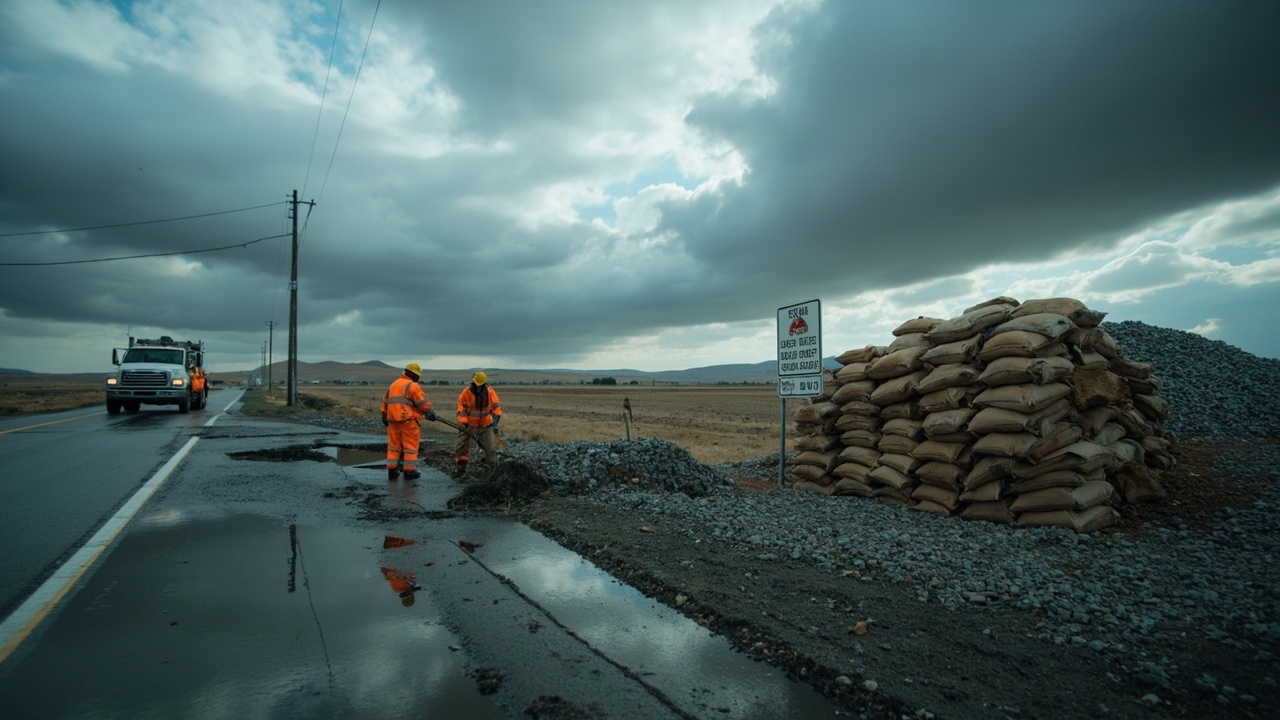
Meanwhile, the California Department of Water Resources has stockpiled flood-fighting resources at 68 locations statewide in preparation for the winter season, according to ABC30 Fresno. The inventory includes 4.4 million sandbags, 400,000 tons of rock, eight warehouses and 211 material containers.
According to the department, stockpile locations in the Central Valley include Sequoia Field Airport and facilities operated by the Fresno County Public Works Department and the City of Sanger Public Works Department.
The Department of Water Resources, in its Oct. 1 water-year statement, confirmed it has stockpiled flood-fighting materials at 68 locations across the state, including 4.4 million sandbags and 400,000 tons of rock for emergency levee repairs, if needed.
DWR's flood operations staff are coordinating closely with local partners in cities and counties across the state. DWR is holding 13 regional workshops for partner agencies in Coastal, Northern, Southern, and Central California communities, according to the Department of Water Resources.
California's flood infrastructure is also being inspected and prepared for winter. Every fall, DWR staff inspect all 1,600 miles of levees within the State Plan of Flood Control and perform maintenance on key flood conveyance facilities, including weirs, bypasses, and flood control structures, to help ensure they function as designed, according to the Department of Water Resources.
The department also reports more than 300,000 flood-risk notifications already sent to property owners, approximately 25 Flood Fight Methods trainings scheduled, and workshops involving county offices of emergency services, Cal OES, the California Coastal Commission, CAL FIRE, the U.S. Army Corps of Engineers and the National Weather Service, according to the state preparedness summary published by Sierra Wave.
Water Year 2027 Starts With Reservoirs Above Average
Oct. 1 marks the start of Water Year 2027 in California, which runs from Oct. 1 to Sept. 30 and is the official 12-month timeframe used by water managers to compile and compare hydrologic records, according to the Department of Water Resources.
At the start of the new water year, major reservoirs across the state are currently at 107 percent of average for this date. Lake Oroville, the largest reservoir in the State Water Project, is currently at 85 percent of average and 48 percent capacity, according to the Department of Water Resources.
State Water Project crews spent the summer performing annual maintenance and inspections to ensure the system is ready for winter operations, according to the Department of Water Resources. The State Water Project relies on seasonal rain and snow to provide water deliveries to 29 contractors serving 27 million Californians. The State Water Project will make its initial allocation for forecasted deliveries on Dec. 1.
The department said it is preparing both to capture and store as much water as possible and to respond to potential extreme weather emergencies, according to the Department of Water Resources. That dual mission reflects recent swings between record-breaking drought and flooding.
For household preparedness, the reservoir numbers do not change the immediate advice from officials: prepare county systems, clear drains, stage flood materials, keep vehicles ready and do not drive around closure signs. The window before mid-December is the time local agencies intend to use.
Sources referenced
- Merced County declares local emergency as officials prepare for potentially strong El Niño - ABC30 Fresno (https://abc30.com/post/merced-county-declares-local-emergency-officials-prepare-potentially-strong-el-nio/19899503/)
- As New Water Year Begins, California Prepares for Strong El Niño and Expanded Water Supplies - California Department of Water Resources (https://water.ca.gov/News/News-Releases/2026/Oct-2026/As-New-Water-Year-Begins-California-Prepares-for-Strong-El-Nino-and-Expanded-Water-Supplies)