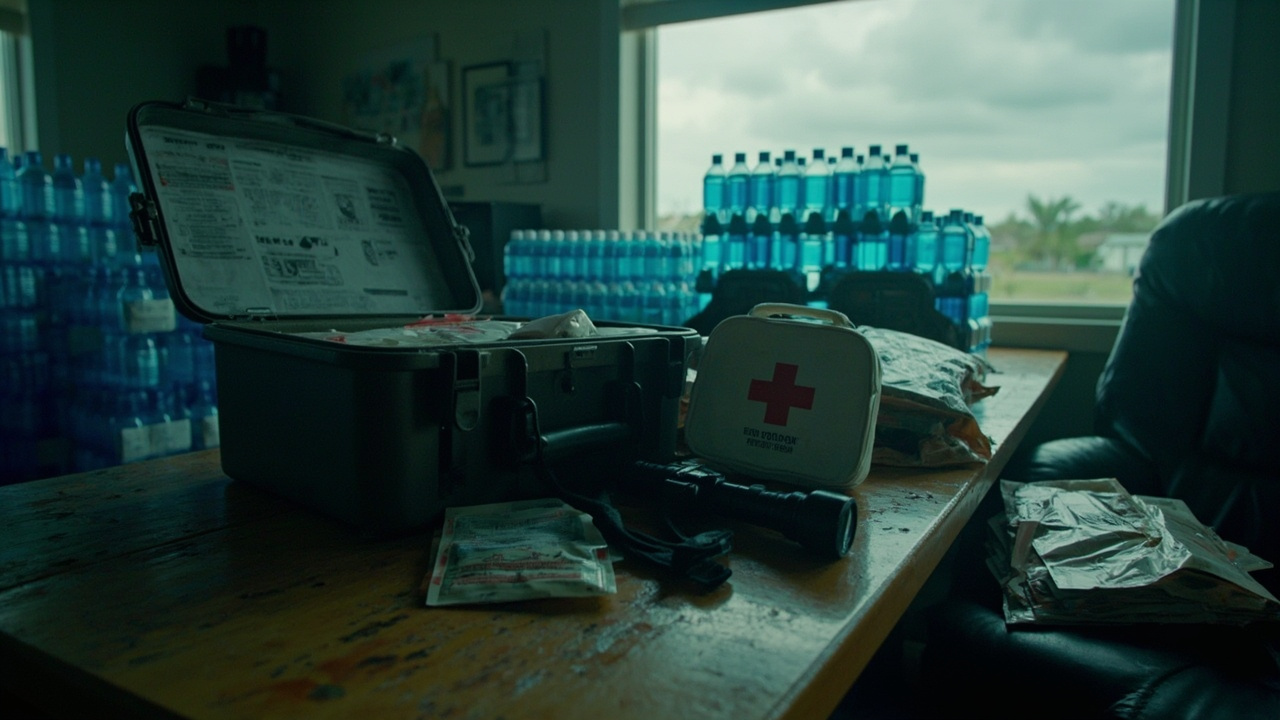
TL;DR: A 2026-08-29 study in the Journal of Emergency Management found 60.3% of surveyed Florida households held an emergency supply kit during Hurricane Ian, with stored water the most stocked, most helpful, and most needed item, yet 54.2% still left home within 72 hours for supplies.
What the new Hurricane Ian kit study asked
The paper titled Assessing emergency supply kits: Contents, usage, and impacts following Hurricane Ian—Florida, 2022 set out to determine efficacy and public health impact of emergency supply kits among the population affected by Hurricane Ian, according to the Journal of Emergency Management.
The authors noted relatively little research addressing emergency supply kit ownership immediately after a disaster strikes to help determine overall effectiveness.
To address that gap, the team fielded a cross-sectional survey between October and December 2022, following Hurricane Ian's landfall.
The survey collected information on demographics, evacuation decisions, and the impact of the storm on homes, according to the Journal of Emergency Management.
It also collected information on needs in the first 72 hours following impact and on illnesses and injuries within 2 weeks of landfall.
Additional modules covered prior disaster experiences, beliefs around preparedness and disasters, and household preparedness including emergency supply kit ownership, items, and use.
How 5,000 households were surveyed
The survey sample consisted of 5,000 households in Evacuation Zone B, selected using address-based sampling, according to the Journal of Emergency Management.
The team used a concurrent dual-mode approach, combining both mail and web-based responses.
An added incentive was offered for those completing online to improve response rates.
A total of 1,342 respondents completed the survey, reported as about 29 percent.
That response provides the denominator for ownership, contents, usage, and early post-impact need estimates discussed below.
Awareness was high, ownership was lower
The majority had heard of an emergency supply kit prior to the survey, at 87.3 percent, according to the Journal of Emergency Management.
At the time of Hurricane Ian, 60.3 percent had an emergency supply kit.
The gap between 87.3 percent awareness and 60.3 percent ownership is a central landscape finding for preparedness planners.
It describes households in Evacuation Zone B that recognized the concept but did not hold a kit when the storm arrived.
The study presents these data as a foundation for understanding the landscape of emergency supply kit ownership, the most used items, and the most needed items immediately after a hurricane's impact.
Stored water led every kit metric
The top item that was in household emergency supply kits was stored water at 93.2 percent, according to the Journal of Emergency Management.
Stored water was also the item deemed most helpful, at 64.4 percent.
When respondents were asked about items that were needed from their emergency supply kit during or immediately after the storm, stored water was needed the most at 62.9 percent.
That three-way result places the same item first for presence, helpfulness, and need.
For households reviewing contents, the finding points to stored water as the first line to check, restock, and protect from contamination and damage.
More than half left home within 72 hours
Roughly half, at 54.2 percent, of respondents had a member of their household leave home within 72 hours of impact for at least one item, according to the Journal of Emergency Management.
That movement occurred inside the same first 72 hours following impact that the survey used to measure needs.
Leaving home in that window can mean driving on debris-covered roads, entering flooded stores, or leaving a damaged structure unattended.
The authors framed the survey to link evacuation decisions, impact on homes, needs in the first 72 hours, and illnesses and injuries within 2 weeks of landfall.
What storm those kits faced
Hurricane Ian originated as Tropical Depression Nine and strengthened into Tropical Storm Ian southeast of Jamaica, then intensified into a Category 3 hurricane before landfall in western Cuba, according to Hurricane Ian on Wikipedia.
It peaked as a Category 5 hurricane with sustained winds of 160 mph early on September 28 while progressing toward the west coast of Florida.
It made landfall just below peak intensity in Southwest Florida on Cayo Costa Island.
After moving inland, Ian weakened to a tropical storm before moving back offshore into the Atlantic, re-strengthening to a hurricane, making final landfall in South Carolina on September 30, becoming extratropical, and dissipating by early the next day, according to Hurricane Ian on Wikipedia.
The same source reports 161 total fatalities, 13 missing, and about $112 billion in damage in 2022 dollars, described as the costliest hurricane in Florida history and third-costliest tropical cyclone on record.
Much of the damage was from flooding brought by a storm surge of 10-15 ft, with Fort Myers, Cape Coral, and Naples hit hard, millions without power, and Sanibel Island, Fort Myers Beach, and Pine Island bearing the brunt of winds and surge at landfall, including collapse of the Sanibel Causeway and Pine Island Causeway access, according to Hurricane Ian on Wikipedia.
Why Evacuation Zone B matters for gear planning
Selecting 5,000 households in Evacuation Zone B by address-based sampling focused the study on people with mapped surge and evacuation exposure, according to the Journal of Emergency Management.
Evacuation decisions were measured alongside kit ownership, items, and use.
Home impact was measured alongside needs in the first 72 hours.
Illnesses and injuries within 2 weeks of landfall were measured alongside prior disaster experiences and beliefs around preparedness and disasters.
That structure lets kit contents be read against real constraints: whether a household stayed or left, what the house sustained, what was needed quickly, and what health effects followed.
What to prioritize in hurricane-prone kit lists
The study concludes these data serve as a foundation for understanding ownership, most used items, and most needed items immediately after impact.
It states emergency supply kit item lists can be modified in hurricane-prone areas to prioritize the most essential items, according to the Journal of Emergency Management.
Stored water's position at 93.2 percent presence, 64.4 percent most helpful, and 62.9 percent most needed supports placing water at the top of that prioritization review.
Households that already hold water can focus next on protection, access, and rotation so the supply remains usable during and immediately after the storm.
Households without a kit can use the 60.3 percent ownership figure as context: many neighbors also lacked a kit at landfall, yet needs in the first 72 hours still arose.
How to use the 87.3% awareness finding
Because 87.3 percent had heard of an emergency supply kit prior to the survey, lack of basic awareness does not explain most non-ownership in this sample, according to the Journal of Emergency Management.
Beliefs around preparedness and disasters and prior disaster experiences were also surveyed, indicating future analysis can test whether attitudes or experience distinguish owners from non-owners.
For local programs, the practical read is to shift from introduction to completion: help households convert recognition into an assembled, accessible kit before landfall.
Mail plus web outreach with an online completion incentive, as used here, also offers a model for reaching evacuation-zone residents for preparedness checks.
Reading the 54.2% who traveled for items
The 54.2 percent who had a household member leave home within 72 hours for at least one item shows kits did not eliminate early trips, according to the Journal of Emergency Management.
That does not establish which items prompted trips, only that at least one item required travel for more than half of responding households.
Cross-reading that travel rate with stored water need at 62.9 percent suggests water shortfalls may have contributed, but the published abstract does not assign trips to specific products.
Preppers can treat any expected 72-hour need as a kit requirement to the extent possible, reducing reasons to enter hazardous post-storm conditions.
Limits of what this abstract establishes
The available abstract reports ownership, selected contents, helpfulness, need, and early travel, but does not report the survey's detailed breakdowns for demographics, evacuation decisions, home impacts, or illnesses and injuries within 2 weeks.
It does not report which other kit items ranked behind stored water for presence, helpfulness, or need.
It does not report response differences between mail and web modes beyond use of an online incentive to improve response rates.
The authors present the work as foundational rather than final guidance, with list modifications proposed as a next application in hurricane-prone areas.
Readers should therefore treat stored water prioritization as supported, while awaiting full tables for other items, health associations, and subgroup patterns.
Bottom line for Prepper Madness readers
Hold an assembled emergency supply kit before hurricane season if you live in a mapped evacuation zone.
Place stored water first in contents, access, and protection planning, consistent with its 93.2 percent presence, 64.4 percent helpfulness, and 62.9 percent need results.
Plan to function without leaving home in the first 72 hours following impact, because 54.2 percent of respondents had to travel for at least one item.
Review evacuation decisions, home vulnerabilities, prior disaster experiences, and beliefs around preparedness as part of the same household plan, matching the domains measured from October to December 2022.
Sources referenced
- Assessing emergency supply kits: Contents, usage, and impacts following Hurricane Ian—Florida, 2022 | Journal of Emergency Management (https://wmpllc.org/ojs/index.php/jem/article/view/4090)
- Hurricane Ian - Wikipedia (https://en.wikipedia.org/wiki/Hurricane_Ian)