TL;DR: Stop using Prepared Hero Hero Fire Spray canisters marked 09/2024 on the base — about 31,000 are recalled because they can rupture in storage and fail during a fire.
On Sept. 10, 2026, the U.S. Consumer Product Safety Commission announced a replacement recall for about 31,000 Hero Fire Spray canisters from Prepared Hero, and national coverage followed on Sept. 15, 2026. The reason is direct and serious for anyone who staged one of these compact sprays in a kitchen, vehicle, or bug-out kit: the canister can deteriorate over time, rupture, and fail to operate when needed, creating a risk of serious injury or death from fire and burn hazards.
According to WPTZ, thousands of the spray extinguisher canisters were recalled because they can explode or deteriorate, causing a potential fire hazard. That report underscores the core preparedness problem — a tool bought for the first seconds of a fire may be empty, weak, or burst when the tab is pressed.
What was recalled and how many
The action covers Hero Fire Spray Fire Canisters from Prepared Hero, according to Home Recall Watch, which summarizes CPSC recall 26-755 published Sept. 10, 2026.
Units affected: about 31,000.
Recall number: 26-755.
Remedy type: replacement with a free replacement unit.
Importer: Prepared Hero, of Sheridan, Wyoming.
Country of manufacture: China.
The hazard statement is consistent across notices: the recalled fire spray canister can deteriorate over time, causing it to rupture and fail to operate during a fire, posing the risk of serious injury or death from fire and burn hazards.
For preppers, the takeaway is immediate. If you bought a compact spray as a layer between a smoke alarm and a full-size extinguisher, treat this recall as a gear failure notice. Pull the unit from service until you confirm the date code and complete the replacement process.
Incident reports on record
The firm has received nine reports of the fire spray canister exploding or deteriorating while in storage, with no injuries reported.
That detail matters for storage planning. These were not reports of misuse or reports of failure during firefighting. They were failures while the product was sitting in storage, according to the recall summary carried by Home Recall Watch.
According to WBAL Baltimore News, nine cases of cans exploding or deteriorating have been reported, with no reported injuries. That account also notes the products can degrade over time and potentially explode or rupture and be ineffective in the event of a fire.
No additional injuries, fires, or causes were stated in the sources used for this report. The notices do not name a root cause for the deterioration.
How to identify the affected batch
Only one batch is included. Check the base, not just the front label.
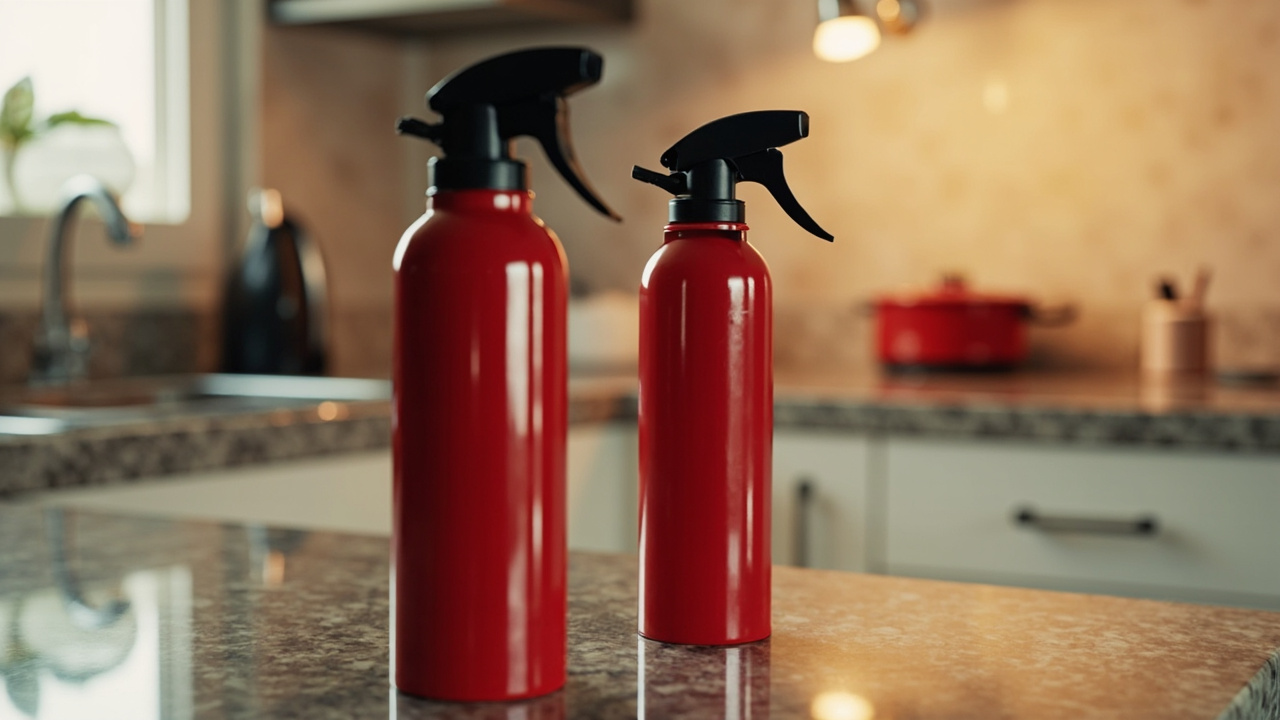
The products involved are described as Hero Fire Spray Fire Canisters in either red and blue or red, with the company's logo and the name HERO Fire Spray on the front panel of the spray. Each canister contains 20 fluid ounces. The circular canisters are about 2.6 inches in diameter and 11.4 inches tall and weigh about 1.8 pounds. A black plastic release tab sits on top of the canister.
The affected batch is clearly marked on the base of the canister with the numbers "09/2024" as the date code.
Households with multiple units should turn every canister over and read each base separately. A unit without 09/2024 on the base is not described as included in this action. Color alone does not confirm inclusion, and matching the front name alone does not confirm inclusion without the date code.
Gifted units need the same check. If you received a Hero Fire Spray as a gift and do not know the purchase date, the base marking is the deciding detail stated in the recall.
Amazon buyers can also review order history for purchase timing, but the physical date code remains the identification step listed in the notices.
Where and when the sprays were sold
The sprays were sold online at PreparedHero.com and Amazon.com from October 2024 through January 2026 for between $18 to $30.
That online-only sales footprint means many units went directly to homes, apartments, cabins, workshops, and vehicles without a store clerk to flag a later recall. Preparedness households that bulk-buy fire gear should search all locations, not just the kitchen.
Check secondary caches that are easy to forget: garage shelves, laundry rooms, pantry tops, under-sink cabinets, truck cabs, RV compartments, boat lockers, hunting cabins, rental properties, and family members' homes where you may have gifted a unit. The sources list the sales period as October 2024 through January 2026, so any Hero Fire Spray acquired in that window deserves a base-code inspection.
The price range of $18 to $30 also helps jog memory when scanning Amazon order histories or email receipts from PreparedHero.com.
What to do now: stop use and replacement
Do not keep an affected canister in service as a backup while you wait. The official remedy directs owners to stop using the fire spray canisters immediately.
Consumers should stop using the fire spray canisters immediately and visit www.preparedhero.com/pages/recall for instructions on how to receive a free replacement unit and how to properly dispose of the recalled fire spray canister according to local and state regulations.
The replacement process involves a hazardous-waste drop-off, not curbside trash. Consumers will be asked to place their fire spray canister in a box, label the box "RECALLED", and bring it to a municipal household hazardous waste (HHW) collection center to receive a free replacement.
That box-and-label step is stated explicitly in the recall remedy. Use a sturdy box that fully encloses the canister, mark RECALLED in large letters, and keep the box upright and away from heat during transport.
How to dispose of a pressurized canister
Do not throw the recalled fire spray canister in the trash or the general recycling stream, including street-level or curbside recycling bins.
Recalled fire spray canisters must be disposed of differently than other products, because they are pressurized. The municipal household hazardous waste collection center may accept the recalled canister for disposal.
Before taking the canister to a HHW collection center, contact that office ahead of time and ask whether it accepts pressurized canisters. If it does not, contact the municipality for further guidance.
That call-ahead instruction is important because acceptance rules differ by county and city. According to WBAL Baltimore News, canisters should not go out in general trash or recycling collection due to them being a pressurized product, and owners should contact the household hazardous waste collection center or municipality to see if it accepts the recalled spray canister for disposal.
Do not puncture, crush, incinerate, or attempt to discharge the recalled unit to make it safe for trash. Those methods are not listed in the remedy and pressurized containers require the HHW pathway described in the notice.
Contact points for the recall
For instructions, owners have three contact paths listed in the recall summary:
- Prepared Hero toll-free at 888-457-2672 from 9 a.m. to 5 p.m. CT Monday through Friday
- Email at [email protected]
- Online at www.preparedhero.com/pages/recall or www.preparedhero.com and click on "Recalls" at the top of the page
Keep the date code, purchase location, and purchase date on hand when you call or submit the online form. If you bought more than one, report each 09/2024 unit separately as directed on the recall page.
What this means for fire-gear readiness
This recall highlights a specific failure mode that preparedness buyers should remember: deterioration over time can cause both rupture in storage and failure to operate during a fire.
That dual risk is worse than a simple dead battery or expired food item. A burst in a drawer can startle or spread contents near occupants, while a quiet loss of pressure may leave no spray when a small stove-top or trash fire starts. The notices describe both outcomes — rupture and failure to operate — under the same hazard.
For households that relied on the 20-fluid-ounce spray as a primary kitchen tool, the immediate need is a compliant replacement path, not improvisation. Complete the HHW drop-off, request the free replacement unit through the company's recall page, and keep the recalled unit out of living and sleeping areas until it is surrendered.
The broader lesson is procedural. Log fire suppression gear by brand, product name, date code, purchase source, and location. Check bases and labels on a schedule, track CPSC recall numbers such as 26-755, and keep the HHW collection center number with other emergency contacts. A compact spray that cannot hold pressure is not a backup — it is a liability that must be replaced through the stated remedy.
Sources referenced
- Fire spray extinguisher canisters recalled over fire risk - WPTZ (https://www.mynbc5.com/article/prepared-hero-fire-spray-canister-recall/73741459)
- Fire spray extinguisher canisters recalled over potential rupture and fire risk | WBAL Baltimore News (https://www.wbal.com/fire-spray-extinguisher-canisters-recalled-over-potential-rupture-and-fire-risk)